

Most buildings disappear into a city.
They might be perfectly good buildings. People buy them. Live in them. Rent them. Savvy investors might even make a lot of money with them.
But, 20 years later, nobody remembers who built them and nobody outside the neighborhood knows their name.
Then there are the exceptions.
The buildings that become part of the city itself.
Everyone knows their name. Taxi drivers need no address. They show up on postcards and in the backgrounds of films. Decades later, they’re still the addresses people aspire to.
Ipanema is one such building.
Yesterday I told you I plan to buy in Ipanema when our RETA deal opens.
Today I want to explain one of the reasons why…
It’s something I’ve watched play out again and again over more than two decades of investing:
Landmarks win.
And there’s research to back that up.

Researchers at the University of Reading’s Henley Business School studied U.S. office buildings designed by the world’s most celebrated architects.
They compared those buildings with ordinary ones in the same submarkets.
The landmark buildings commanded rents 5% to 7% higher. And in their main model, they sold for prices 17% higher.
Same city. Same neighborhood. Same market. The only difference was that one building was special and the other wasn’t.
Economists at the London School of Economics looked at the same question in housing. They studied Oak Park, Illinois, where Frank Lloyd Wright designed 24 homes between 1892 and 1914. What they found surprised me. Homes simply located near a Wright building sold at a premium of about 8.5%.
Think about that.
People were willing to pay more simply to live near architectural distinction.
And you can see why.
Once a building becomes an address people recognize and aspire to, the building itself becomes part of what you’re buying. You’re no longer competing solely on square footage, finishes or the view from the balcony.
You’re selling the address.
And Ipanema is more than simply a landmark address…
It’s on the last prime waterfront land in Panama City. The ideal location.
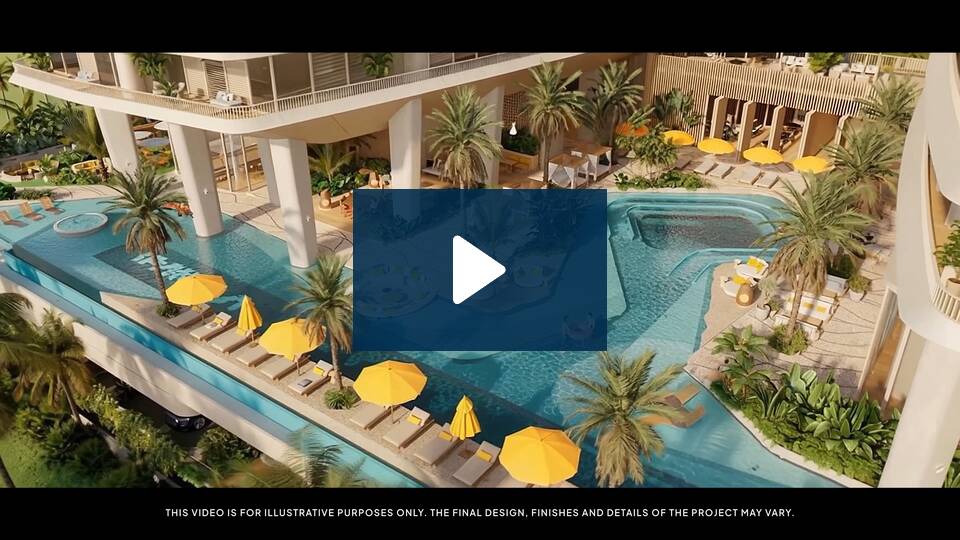
With a vast suite of planned amenities, from pools to an urban beach, sports courts, bistro, wellness area…
It’s a landmark in all ways.
And we’re getting in at a RETA-only price with the option of exclusive developer financing.

So why do landmarks behave this way, why such a premium?
I think there are four reasons, and they reinforce each other.
The first is that a landmark can’t be replicated. A developer can always put up another glass tower down the street. He can’t put up another icon on the same spot. When there’s only one of something, the only way to own it is to buy from someone who already does.
The second is that the name does the marketing. When you sell or rent a condo in a building everyone knows, you don’t have to explain why it’s desirable. Buyers and renters of means come looking for the address. That means shorter vacancies, stronger rents and a deeper pool of buyers when you choose to sell.
The third is resilience. When markets soften, the first things buyers discount are generic stock in secondary locations. The best addresses are the last to feel it and the first to recover. People trade down from ordinary buildings. They queue up for the extraordinary ones. This is a crucial ingredient to our Ipanema deal.
The fourth is the one people overlook: who builds a landmark, and why.
A developer building to exit optimizes for the sale. But a developer building for his legacy optimizes for how the building will look, feel and perform in 30 years. That shows up in the land he chooses, in the materials and in the amenities.
It shows up in a thousand decisions you never see in a brochure.
Which brings me to Alfredo Alemán and the GLP group behind Ipanema…
For Alfredo, legacy isn’t a slogan. It’s the family business.
His father, Mayor Alfredo Alemán, founded Grupo Los Pueblos as Panama City was beginning to step onto the international stage. There was a clear vision: to transform how Panama was built and to make it a place the world would want to come to.
His father went on to build some of the landmarks of modern Panama City. Albrook Mall stretches more than a mile and is among the largest shopping malls in Latin America. Beside it stands the Gran Terminal, the country’s most important transport hub, moving more than 100,000 people a day.
Alfredo took over that mission. Today he runs GLP as CEO. Over four decades, the group has delivered more than 60 projects and grown into one of the largest developers in Panama.
And here’s what I most want you to understand about Alfredo and GLP…
Alfredo isn’t an outside developer parachuting in to build and leave. Panama City is his city. He lives there. He works there. He plays there. He’s fiercely proud of Panama, and he wants to help it take its place on the world stage as a great hub of trade, finance and tourism.
When a man is building in his own hometown, with his family name on it, he builds differently.
And this Friday, September 25, at 1 p.m. ET I’ve asked Alfredo to step into the RETA Briefing Room to tell you about it…
Register for the Briefing Room.

I’ve known Alfredo for close to 20 years, and RETA members have done very well in his communities.
When he couldn’t find the right land in the heart of Panama City, he built it.
Ocean Reef was the first habitable man-made islands in Latin America, two islands in the Bay of Panama with a marina between them. RETA members who bought at Seascape from $783,000 later saw a condo there list for $995,000, an uplift of $212,000. Members renting out their condos there get $6,000 a month.
At Santa María Golf and Country Club, one of the most exclusive communities in the city, six RETA members bought three-bedroom condos at Pinnacle from $540,020 in 2021. By 2024, similar condos were listed for as much as $695,000.
And out on the Pacific coast, Alfredo took Playa Caracol, the closest, nicest beach to Panama City, and turned it into an emerging resort community. For years a car-killing road had kept every other developer away. Alfredo did a deal with the families who owned the land and then became almost a one-man Path of Progress, investing in roads, access and services across the whole peninsula. RETA members who bought at Surfside from $214,600 later saw similar condos offered by the developer at $330,000. That’s an uplift of $115,400. At Las Olas, members bought ocean-view condos from $254,600, and similar condos were later listed at $355,580.
That’s the track record of a developer who builds to last.

Now Alfredo’s bringing that same approach to Ipanema.
When the family that owned the land for Ipanema decided to develop, they didn’t want someone to cram in as many condos as possible. They wanted a landmark. They went to the developer with a proven record of creating them.
Ipanema will be three towers shaped like the wind-filled sails of a frigate, billowing out over the bay. The site sits on the last prime waterfront land of its kind in Panama City, right beside Costa del Este and its 50-plus multinational headquarters.
Around 7,500 square meters of amenities are planned: a 50-meter pool, a wellness area and steam room, sports courts, a gym, a bar and bistro, and a waterfront park fronted by a manicured sand beach.
Alfredo put it simply: “From the beginning this is about creating an icon. Part of a legacy. My grandkids will pass Ipanema and say my grandfather did that.”
That’s what makes this opportunity so interesting to me.
We’re not being asked to pay an established-landmark price.
Through RETA, we can own a luxurious two-bedroom condo in Ipanema from $375,912.
My projection is that a condo at that entry price could be worth $600,000 five years after delivery—a potential gain of $224,088. I expect long-term rents around $3,000 a month, which would put gross yield close to 10% on our RETA price. And we have exclusive developer financing.
But the bigger idea is this:
We’re getting the chance to buy before the landmark is a landmark.
Before those sails become part of Panama City’s skyline.
Before thousands of people drive past them every day.
Before “Ipanema” becomes an address that needs no explanation.
That’s the moment I want to own.
It’s why I plan to buy.
And on Friday, September 25, at 1 p.m. ET, as I say I’m bringing Alfredo into the Briefing Room.
I want you to hear the story directly from him.
Ask him about his father’s legacy.
Ask him why this particular piece of waterfront mattered.
Ask him why he’s putting 7,500 square meters into amenities instead of squeezing more condos onto the site.
And ask him what he means when he says he wants his grandchildren to drive past Ipanema one day and say:
“My grandfather did that.”
Register for the Briefing Room: Join me with developer Alfredo Alemán.
Wishing you good real estate investing,

P.S. See the sails for yourself. My team put together a short video tour of Ipanema, including the towers, the waterfront park and beach, and the amenities. Renders shouldn’t be treated as final, but they give you a real sense of the landmark Alfredo is creating. Watch the video.
P.P.S. Ipanema will be a landmark marking Panama City’s arrival as a global hub of trade and finance. In the September issue of RETA, I lay out why Panama City is following Singapore’s path from strategic location to global hub. I cover the three waves of transformation I’ve watched since 2004, the multinationals, airlines and investment pouring in, and why Costa del Este sits at the center of what comes next. If you haven’t read it yet, do it before Friday’s Briefing Room with Alfredo. Read the September issue.